Author: Zoë Ghyselinck
Health humanities, narrative medicine and the physician-patient relationship: an exploration
Health humanities, narrative medicine and the physician-patient relationship: an exploration.
Health humanities is an interdisciplinary field that combines the study of the arts and humanities with health, medicine, and healthcare. It uses methods from disciplines like literature, philosophy, history, ethics, and cultural studies to understand and reflect on health-related issues, focusing on the human experience of illness, wellness, and care. The goal is to improve healthcare practice and our understanding of health by complementing biomedical perspectives with cultural, social, and ethical insights.
Rita Charon, one of the founders of narrative medicine described its importance in her publication in the JAMA of 2001:
“The effective practice of medicine requires narrative competence, that is, the ability to acknowledge, absorb, interpret, and act on the stories and plights of others. Medicine practiced with narrative competence, called narrative medicine, is proposed as a model for humane and effective medical practice. Adopting methods such as close reading of literature and reflective writing allows narrative medicine to examine and illuminate 4 of medicine’s central narrative situations: physician and patient, physician and self, physician and colleagues, and physicians and society.”
Charon R. Narrative Medicine: A Model for Empathy, Reflection, Profession, and Trust. JAMA. 2001;286(15):1897–1902. doi:10.1001/jama.286.15.1897
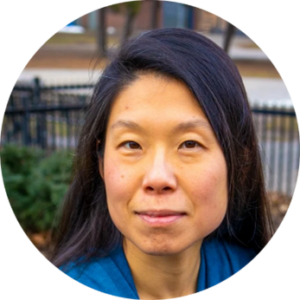
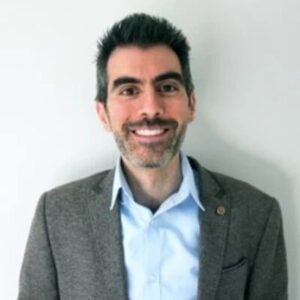
We will be joined by Dr. Sarah Kim and Hartley Jafine from the University of Toronto

Dr. Sarah Kim is an Assistant Professor at the Department of Family and Community Medicine and Dance Artist-in-Residence for the Health, Arts & Humanities Program at the University of Toronto. She works as a family physician with focused practices in Narrative Medicine, Internal Family Systems Psychotherapy and Sports & Exercise Medicine.
Hartley Jafine is an instructor in the Bachelor of Health Sciences (Honours) program and Arts & Science program at McMaster University, where he facilitates theatre and arts-based courses. He is also a lecturer (part-time) with the Department of Family Medicine. His areas of teaching and research are in health humanities, applied theatre, and arts-based research practices.
Programme:
Thursday 11/12/2025, morning session, 10h00-13h00
10h00-10h10: Welcome by Prof. Dr. Jürgen Pieters (CHARM-network)
10h10-10h30: Introduction on health humanities – Dr. Sarah Kim (Department of Family and Community Medicine, University of Toronto)
10h30-11h00: Narrative medicine in clinical and ethical decision making with older patients – Prof. Dr. Ruth Piers (Department of internal medicine and paediatrics, UZ Gent/UGent)
11h00-11h20: Break
11h20-11h50: “Two voices on choosing life amid uncertainty”: physician and patient narratives – Dr. Michaël Saerens (Department of internal medicine and paediatrics, UZ Gent/UGent)
11h50-12h20: “The art of (non)-movement and flow in clinical leadership” – Prof. Dr. Dominique Benoit (Department of internal medicine and paediatrics, UZ Gent/UGent)
12h20-13h00: Closing remarks and Q&A
onderdag 11/12/2025, afternoon session 15u-18u
15h00 – 15h30: Person-centred care and the human experience of ageing – Prof. Em. Mirko Petrovic (Department of internal medicine and paediatrics, UZ Gent/UGent)
15h30 – 16h00: “Integrating literature and arts in the care for patients at the Ghent University Hospital”– Prof. Dr. Tessa Kerre (Department of internal medicine and paediatrics, UZ Gent/UGent)
16h00 – 16h30: “What if Ivan Ilyich was your patient?” – Compassionate care meets narrative medicine – Prof. Jürgen Pieters (Faculty of Arts and Philosophy UGent) and Dr. Fleur Helewaut (primary care physician, PhD student, Faculty of Medicine and Health Sciences UGent)
16h30 – 16h50: Break
16h50 – 17h40: Health Humanities, professional identity and compassionate leadership – Dr. Sarah Kim and Hartley Jafine (Department of Family Medicine, McMaster University/University of Toronto)
17h40 – 18h: Q&A and closing remarks
Friday 12/12/2025, morning session 10h-12h30:
Workshop “Health Humanities and the art of physician-patient communication” – Hartley Jafine. (Department of Family Medicine, McMaster University/University of Toronto)
Friday 12/12/2025, afternoon session 14h00-16h00:
Closing session: “Ways forward for health humanities in contemporary health care”
Health Humanities in Medical Education
On Thursday 11 and Friday 12 December, two colleagues from the University of Toronto will be visiting our faculty for a number of activities focusing on the opportunities that health humanities offer for medical education.
The speakers – Dr. Sarah Kim and Dr. Hartley Jafine – are both involved in medical education at their university.
Programme
Thursday 11 December
10 a.m. to 1 p.m.: presentation of Health Humanities, “good practices” from Toronto and Ghent
(Dr. Sarah Kim, in collaboration with the International Thematic Network CHARM, Prof. Ruth Piers, Prof. Dominique Benoit)
3-6 p.m.: “good practices” from Toronto and Ghent
(Dr. Sarah Kim, Dr. Hartley Jafine, Prof. Jürgen Pieters, Prof. Dr. Mirko Petrovic, Dr. Fleur Helewaut and others)
Friday 12 December
10 a.m.-12.30 p.m. workshop “improvisational theatre in medical educational contexts” (Dr Hartley Jafine) – this workshop is intended for (and limited to) Skills Lab staff
2.30-4.30 p.m. Round table and group discussion: what can we take away for the future?
Anyone who would like to participate in (one of) these activities can register via this link.
Accreditation is being requested.
If you have any questions, would like to contribute something yourself, or would like to see a particular topic addressed, please contact Fleur Helewaut
CHARM Intern Zeynep about her stay in our team
Zeynep Saban, our CHARM intern who stayed with us for three months over the summer, has left a testimonial about her stay in Ghent.

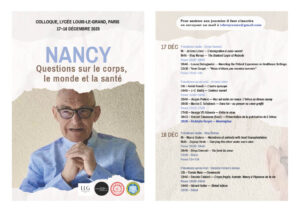
CHARM Conference 5-6 November 2025
CHARM CONFERENCE
“Health, Diseases and Environment: Between the Global and the Local”
Programme
Nancy – Maison des Sciences de l’Homme
23–25 rue Baron Louis, Nancy, France
Salle de se minaire, pole SJPEG
November 5–6, 2025
Org. Zoë Ghyselinck, Jürgen Pieters, Claire Crignon, Ingrid Voléry and Emanuelle Simon
Wednesday, November 5 –
Seminar Room
12:00 pm – Lunch (on site)
Presentation length: 20 minutes, followed by 10 minutes of discussion.
Chair J. Pieters (Ghent University)
2:00-2:30 pm – I. Voléry, E. Simon, C. Crignon (Université de Lorraine):
Presentation of the Trapps Project
2:30–2:45 pm – Coffee Break
2:45-3:30 pm (ONLINE)
Dr. Rong Huang (Peking University), “Yiwen hutong: The Symbiosis of Medicine and
Literature in Traditional Chinese Texts”.
3:30–3:45 pm – Coffee Break
3:45–5:15 pm – CHARM MEETING (ONLINE)
***
Thursday, November 6
9:00 am – Welcome Coffee
Chair E. Simon (Université de Lorraine)
9:30 am – Gwenola Le Naour (Institut d’Etudes Politiques, Lyon) – “Health and Toxic
Environments”.
10:30–11:00 am– Coffee Break
Chair C. Crignon (Université de Lorraine)
11:00–11:30 am– Sari Altschuler (Northeastern University)
“Insisting on the Local: Uncoupling Race and Madness in the Early United States”
11:30 AM–12:00 pm – Chris Parsons (Northeastern University)
“Planetary Histories of Smallpox in Colonial New England”
12:00–2:00 pm – Lunch (on site)
Chair – R. Wakote (Irenee, Université de Lorraine)
2:00–2:30 pm – Francis Guillemin (Public Health, INSPIIRE, Université de
Lorraine)
“Patient-reported outcomes measurement invariance for international comparisons of
local experiences and health issues”.
2:30–3:00 pm – Nora Bezaz and Ameni Ben Jebril (CEREFIGE, Université de
Lorraine) Anika Schumacher (Grenoble École de Management).
“Virtual Reality and the Well-Being of Older Adults in Long-Term Care Facilities: A
Conceptual Framework and Hypotheses”.
3:00–3:30 pm – Coffee Break
Chair I. Voléry (Université de Lorraine)
3:30–4:00 pm – Jun Jing Min Song (Department of Sociology, Tsinghua University,
China).
“Reverse Care at the End of Life”
4:00–4:30 pm – General Discussion and Conclusion (Z. Ghyselinck, Ghent University)
Testimonial CHARM Chair Rong Huang
Staying Local, Thinking Global
The moment I jotted down this title, I realized how it appeared to jar against the backdrop of a world increasingly marked by regional conflicts, widespread distrust, and extreme conservatism.
Yet this is how I felt during my 6-week stay at Ghent as the CHARM chair in 2025.
CHARM stands for the Consortium for Health Humanities, Arts, Reading and Medicine, a delightful acronym that also doubles as a mission statement. It signals a global network committed to bridging humanities, medicine and care through an interdisciplinary lens, with a particular emphasis on ‘reading,’ the signature strength of Ghent’s Health Humanities group and, indeed, the fundamental method of the humanities in general.
My honor to be appointed as the CHARM chair allowed me firsthand insight into the network, its organizational processes, and the vibrant events held in Ghent and beyond. I met the CHARM team, had some lovely conversations, joined a few reading sessions, but the centerpiece was undoubtedly the Annual Season School in August. This three-day session, entitled ‘Literature and Culture as Practices of Care,’ was held at Museum Dr. Guislain, built on Belgium’s first insane asylum in 1857–in short, a perfect site for a health humanities gathering.
Each day featured two keynote speeches by distinguished scholars in the field and two panels of presentations from early-career researchers. Each keynote speech lasted about one hour, followed by a 30-min discussion. In the panels, each presenter had ten minutes to outline their work-in-progress project, followed by 30-min feedback from two experts, along with comments and questions from the group.
The program mirrored the trends shaping health humanities today. Long-standing themes from literature, philosophy, narrative, and reading were joined by emerging topics in graphic medicine, neurodiversity, media studies, digital storytelling, comparative linguistics, and more. All converged on a vision of care as a collaborative, lived, and creative act rather than merely a clinical prescription. Yet the medical voice was never sidelined. One practitioner’s testimony underscored the imperative for health humanities to forge bridges between the clinic and the academy.
This major event in August spoke eloquently to CHARM’s global outreach as it drew participants and speakers from institutions across Asia, Australia, Europe, and North America. Looking ahead, I was told that CHARM will continue to deepen partnerships around the world and particularly in the Global South. With the rise of medical/health humanities in the past decades, regional institutions have emerged to represent context-specific cases while also speaking to the broader human condition. Independent initiatives may be self-sufficient, but new ideas, creative projects, and interdisciplinary collaborations often arise from deep, in-person, committed exchanges. Although the age of AI promises barrier-free communication, the information cocoon it weaves can become yet another box that’s hard to escape. I suppose this is the meaning of CHARM: to build a network that becomes a hub for alternative possibilities.
Perhaps this is the true charm of CHARM. How did it affect me, then? There are many memorable moments, but one stands out when I felt ‘local’ in Ghent for the first time, tracing the city’s medieval landscape on a rented bike. The saying is that everyone in this third-most populous city in Belgium owns at least one bike. Even the Uber driver who took me to the train station proudly shared stories of his three bikes and the heroic wounds and injuries from his cycling adventures. This, and many other specific episodes, blended into my lived experience in Ghent. They reminded me that health is something daily, tactile, and communal, and that even amid global turbulence, the local pulse can set the pace for change.
What I’ve described above are abstract reflections. It is the concrete people here who turn ideas into actual presence. I want to thank the CHARM ‘gang’ in Ghent: Zeynep and Luna, I wish your projects all the success; Zoë and Jürgen, I know I’ve thanked you many times already but here is another one for bringing CHARM to life.
CHARM Expert Meeting: Connecting Technology, Art and Care
What can technology, art, and care mean for one another in times of ageing populations, digital transformation, and an increasing need for connection?


In this small-scale expert meeting, hosted by the international CHARM network, a group of researchers, practitioners, artists, and partners working in the cultural field explores the intersections of technology, art, and healthcare. We ask how digital tools and artistic practices might jointly contribute to more inclusive, accessible, and meaningful forms of care.
The event opens with a reflection by hematologist and CHARM-promotor Tessa Kerre (Ghent University / Ghent University Hospital), who shares insights into socially engaged projects such as Art on Prescription and Art at the Bedside. Following this, Isabel Vermote (Royal Museum of Fine Arts of Belgium / ‘Museum op Maat’) and Dieter De Witte (Ghent University / Royal Museum of Fine Arts of Belgium) present prototypes from innovative projects that use digital tools to connect people in care settings with art and heritage — both in museums and beyond.
The second half of the meeting will be dedicated to a roundtable discussion, where all participants will reflect on the potential of art as a “soft technology”: not as a substitute, but as an enrichment of care, enhancing mental and emotional well-being. Technology and art here are not merely tools, but invite us into an aesthetic space of encounter, where care relations can be slowed down and deepened.
Date and time: Thursday, 3 July, 16:00–19:00
Location: Room 0.8, Together, The Core, Campus UZ Gent
Entrance 37.C, Heymanslaan 10, 9000 Ghent, Belgium


Jürgen Pieters Delivers Guest Lecture at Stanford on the Healing Powers of Fiction
On May 14, 2025, Professor Jürgen Pieters, literary scholar at Ghent University and director of CHARM, delivers a guest lecture at the Stanford Humanities Center titled Please Read Carefully: The Healing Powers of Fiction. This event is part of the Linda Randall Meier Research Workshop in the Medical Humanities, co-organised by CHARM Member Laura Wittman (Associate professor of French and Italian literature and culture at Stanford University).
In his lecture, Pieters explores the consolatory and therapeutic potential of literature. Drawing on the works of Walter Benjamin, Marcel Proust, and Donald Winnicott, he reflects on reading as a form of care and self-care, situating it within the broader tradition of bibliotherapy.
Pieters is the author of Literature and Consolation: Fictions of Comfort (Edinburgh University Press, 2021) and is currently working on a new book on bibliotherapeutic reading. His lecture underscores the significance of literary engagement in moments of distress—a theme central to CHARM’s mission to explore the intersections of care, health, and the arts.
For more information on the event: https://shc.stanford.edu/stanford-humanities-center/events/jurgen-pieters-please-read-carefully-healing-powers-fiction
CHARM Workshop Digital Futures _ 28-29 April 2025, Northeastern University, Boston
Annual CHARM Conference 2025 _ Nancy
Health, Diseases and Environment: Between the Global and the Local
Université de Lorraine, Nancy (France)
5-6 November 2025
As Latour argues in Où atterrir, comment s’orienter en politique (2017), today the term “local” is often associated with nostalgic and defensive positions, linked to particularity, subjectivity, and sensibility, in contrast to the “global,” which is viewed as a horizon of universality, objectivity, and rationality. To claim proximity to patients or communities suffering from toxic exposure risks being perceived as merely expressing emotional responses rather than offering an analytical perspective on the situation.
This is probably why discourses on health, disease and the role of the environment in the emergence of new diseases often prioritise global approaches such as One Health, Global Health and Integrative Health.
In this two-day conference, we aim to take an analytical and critical approach to universal concepts and norms that tend to obscure differences between
individuals, the heterogeneity of situations, and localised or individualised approaches to disease and health.
Our aim is to examine local health practices, particular behaviours, care strategies and exposures to toxic substances in order to understand how people develop care strategies that differ from those promoted by global public health norms, or how individuals sometimes challenge or reject recommendations disseminated by public health discourses.
We particularly welcome proposals from the health humanities, as well as from scholars in literary studies, history, philosophy, anthropology, sociology, medical sciences, and public health. Interdisciplinary approaches that bridge the humanities, social sciences, and medical sciences are strongly encouraged.
Scientific Committee
Claire Crignon (Université de Lorraine)
Emanuelle Simon (Université de Lorraine)
Ingrid Volery (Université de Lorraine)
Zoë Ghyselinck (Ghent University)
Jürgen Pieters (Ghent University)
We invite proposals on the following topics:
1. The History of Global Health, One Health, and Critical Approaches to These Concepts
Contributions that explore the historical development of global health frameworks, One Health, and the critical perspectives that challenge or expand these ideas.
2. Definitions of the Local and the Diverse Expressions and Manifestations of Local Discourses
Submissions that examine the concept of the “local” in health and disease discourses, highlighting how local contexts shape and inform health practices, beliefs, and interventions.
3. Field Research Addressing Health and Disease Issues Often Overlooked or Undocumented
Contributions that present specific field research uncovering situations and health challenges that are typically underrepresented or unexplored in mainstream health
analyses.
Please send your abstracts (max. 300 words) to claire.crignon@univ-lorraine.fr
In addition to paper proposals, we are also looking for session chairs and discussants, as well as Health Humanities scholars interested in giving short presentations on research and teaching projects during the first day of the conference.
DEADLINE for submission: 15 May 2025